
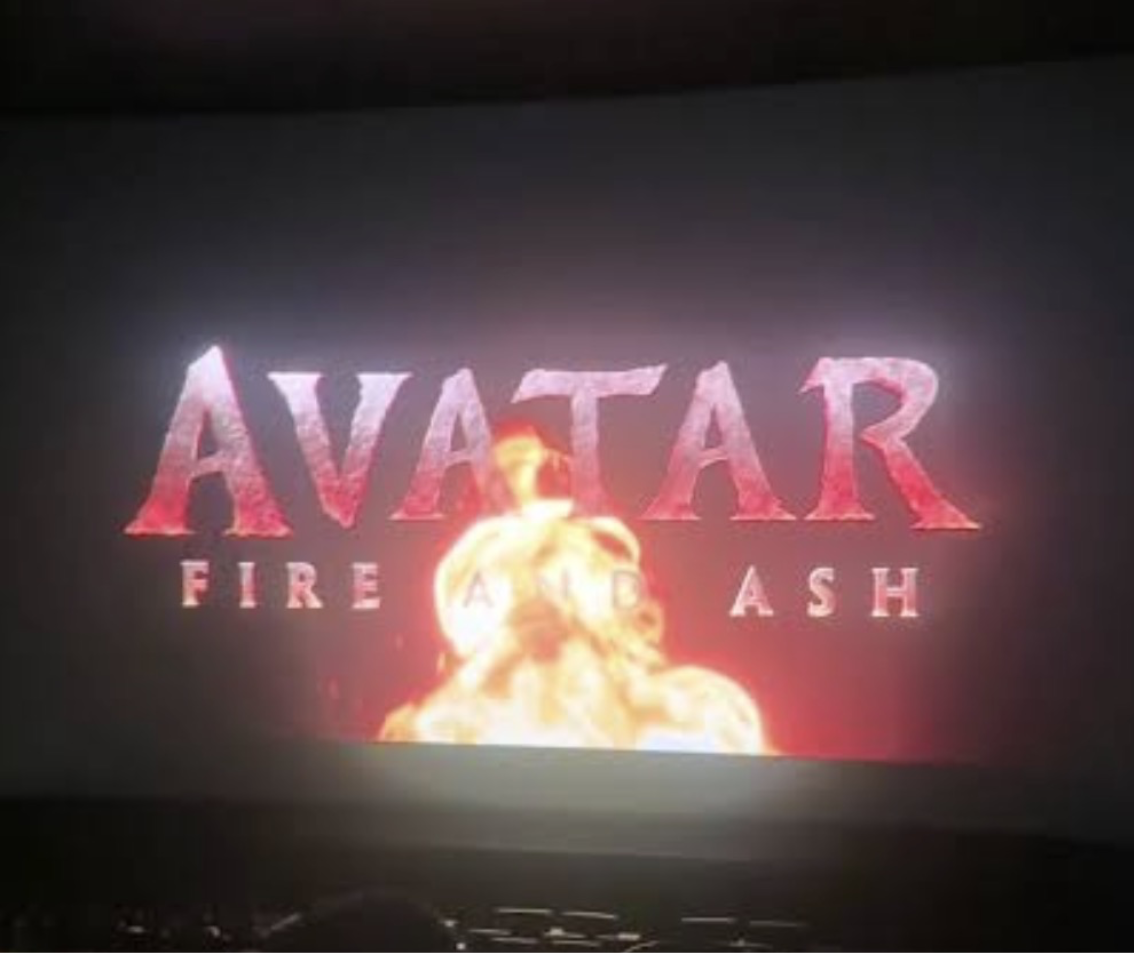
“Avatar: Fire and Ash” takes audiences back to Pandora, the habitable moon located 4.4 light-years from Earth. Pandora is the home to the Na’vi; However, this time, the world feels much harsher. Instead of glowing forests and bright oceans, the film is filled with volcanic landscapes, drifting ash, and darker colors that match the movie’s more serious tone.
Watching this film, I appreciated this change because it made Pandora feel bigger and more dangerous, like there are still parts of the planet the viewers don’t fully understand. The new Fire and Ash Na’vi are especially interesting, showing how different groups survive in completely different environments, and exploring new ideas about beliefs regarding Eywa, the deity that the Na’vi worship.
Visually, the movie is exactly what people expect from an Avatar film: huge, detailed, and clearly made for the theater. The effects, the motion capture, and the environments are so realistic that it’s easy to get pulled into the world. All in all, just experiencing Pandora again was worth the watch!
Where opinions really start to split is with the story. The film tries to dig deeper into themes like anger, loss, and how violence can keep repeating if no one breaks the cycle. This emotional direction gave more appeal to the characters, especially the Sully family, and gave them meaningful struggles instead of just action scenes. However, the plot was familiar and didn’t take enough risks compared to how groundbreaking the visuals are.
One of the biggest criticisms I have is the amount of focus placed on the character Spider. Personally, I felt that his storyline took too much of the movie, pulling attention away from the new Fire and Ash Na’vi that I was excited to learn about. Instead of exploring the new culture, the film sometimes returns to Spider’s perspective. I was disappointed that a really interesting part of the world wasn’t given enough time to develop.
The connection between Spider and the Sully family felt confusing at times, like his role kept changing between scenes. Jack Champion, Spider’s actor, gave weak performances at times in the movie, making it hard as an audience member to connect with the character.
Instead of the major focus on Spider, it would have been exciting to learn about the new and exciting character Varang. She plays a big role regarding the Fire and Ash people, yet her story didn’t have enough screentime. Her backstory was short and would have been interesting to learn more about, and how it led to her disbelief in Eywa. Seeing more scenes with contrast between her and Neytiri, whose faith in Eywa is strong, could have been seen more.
In the end, “Avatar: Fire and Ash” is a movie that is stunning, but fails to tell a compelling story. The world of Pandora and the cinematic spectacle make it very enjoyable. On the other hand, I feel that it missed an opportunity to focus more on the new Na’vi culture. It’s a film that sparks conversation. It is impressive, emotional, and sometimes frustrating, but rarely forgettable!